
Designed, written & printed in the USA · Trusted by 4,000+ independent retailers worldwide
0%

Finding a China top-tier Tear and Share Note Cards supplier requires more than comparing catalog photos. Buyers must examine paper quality, tear performance, printing accuracy, and production consistency. A reliable supplier should explain its materials clearly. It should also provide samples before large-scale production.

Mei Lin Chen, a stationery sourcing consultant with experience in Asian paper manufacturing, says, “A good tear line should feel invisible before use and effortless during use.” This simple observation matters. A rough perforation can leave jagged edges. Weak adhesive can loosen during transport. Inconsistent folding can make each card feel different.

The strongest Tear and Share Note Cards suppliers usually maintain controlled cutting, perforation, folding, and packaging processes. Ask for close-up samples. Check whether the cards separate cleanly beside a desk lamp. Review the paper weight, surface finish, ink sharpness, and back-panel alignment. Factory communication also deserves attention. Clear answers often reveal stronger production discipline.

However, no supplier is perfect. Even an experienced factory may face color variation between batches. Moisture can also affect paper during shipping. That risk is easy to overlook. Buyers should request written specifications, pre-production approval, and realistic lead times. Independent quality checks may add cost, but they can prevent expensive rework.

This guide explores how to identify China’s most dependable Tear and Share Note Cards manufacturers. It considers craftsmanship, customization, quality control, communication, and long-term reliability. The best choice may not be the cheapest quote. It may be the supplier that notices small problems before the buyer does.
China Top Tear and Share Note Cards Supplier?

Product Definition: Tear-and-Share Note Cards Under ISO 216 Size Standards

China Top-Tier Tear-and-Share Note Cards Supplier

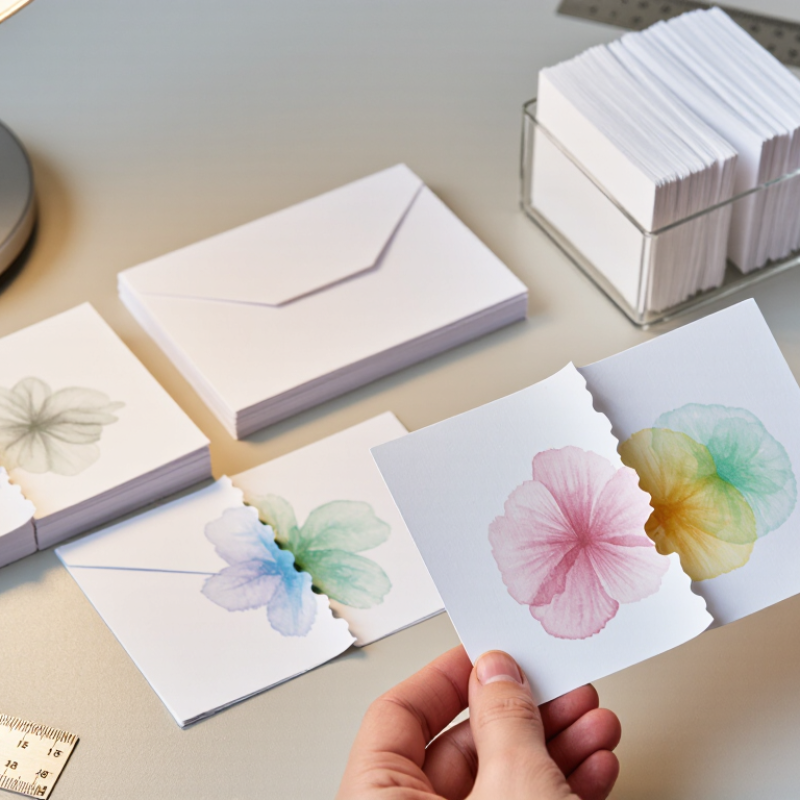
Tear-and-share note cards are practical stationery for meetings, classrooms, reception desks, and daily planning. Their design combines a fixed card size with a clean perforated edge. ISO 216 size standards create familiar dimensions, such as A6 at 105 × 148 mm and A5 at 148 × 210 mm. This consistency helps users select envelopes, storage trays, and display holders with fewer fitting problems.

A capable Chinese supplier should understand more than cutting paper. Production teams need to control sheet grain, perforation depth, corner accuracy, and print alignment. During sampling, I would check whether one card separates smoothly without tearing the writing area. The edge should feel controlled, not ragged. Paper weight also matters. Lightweight stock suits quick reminders, while heavier stock feels better for reusable planning. Small details matter.

Quality control should include size measurement, page-count checks, ink inspection, and packaging reviews. Samples from different production batches can reveal changes that one inspection misses. However, perforations are not always perfect. Excessive pressure may cause early separation, while weak perforations frustrate users. A dependable supplier should record these results and adjust the cutting setup. Clear specifications, traceable samples, and honest communication build reliability. The best choice is not simply the lowest quotation. It is a supplier that can repeatedly match ISO 216 dimensions and practical handling needs.

Material Benchmarks: 60–350 gsm Paper and ISO 1974 Tear Resistance

China Top Tear and Share Note Cards Supplier?

For tear-and-share note cards, paper weight is only the starting point. A 60 gsm sheet feels light and flexible. It suits compact pads and frequent writing. Around 120–180 gsm offers better handling and cleaner separation. At 250–350 gsm, the card feels firm, but excessive stiffness can make tearing uncomfortable. The right choice depends on sheet size, perforation depth, and intended use.

ISO 1974:2012 specifies the Elmendorf method for measuring paper tear resistance. It reports tear force in millinewtons, not a universal pass-or-fail grade. Therefore, buyers should request machine-direction and cross-direction results from the same production batch. Small details matter. A sharp perforation can reduce required tearing force, while rough fibers may create uneven edges. Grammage alone cannot predict performance.

Industry data also provides useful context. CEPI’s Key Statistics 2023 recorded 79.5 million tonnes of paper and board production in Europe. This scale supports standardized testing, but it does not guarantee consistent note-card quality. The U.S. Environmental Protection Agency reported a 68.2% paper and paperboard recycling rate in its latest detailed materials report. Recycled fibers can improve resource efficiency, yet their tear performance may vary between batches. That is the part suppliers should explain honestly. A stronger card is not always a better card. Testing samples under real tearing conditions remains necessary.

China Top Tear and Share Note Cards Supplier? - Material Benchmarks: 60–350 gsm Paper and ISO 1974 Tear Resistance
Paper Basis Weight Typical Caliper ISO 1974 Tear Resistance, MD ISO 1974 Tear Resistance, CD Typical Note Card Application Material Characteristics Recommended Quality Checks
60–90 gsm 70–115 μm 250–500 mN 300–600 mN Lightweight message slips, inserts, temporary reminder sheets Flexible and economical; easy to fold but more susceptible to edge damage and show-through. Basis weight, opacity, surface strength, folding endurance, and visible edge tearing.
100–150 gsm 110–190 μm 400–800 mN 500–950 mN Everyday share notes, small memo cards, writing inserts Balanced flexibility and handling strength; suitable for routine writing and distribution. Grammage uniformity, smoothness, ink dry time, curl, and tear resistance in both directions.
160–220 gsm 180–280 μm 600–1,100 mN 700–1,300 mN Premium note cards, response cards, writable mini-postcards Stiffer construction with improved dimensional stability and better resistance to handling stress. Caliper, stiffness, surface pick resistance, print uniformity, and die-cut edge quality.
230–300 gsm 260–400 μm 800–1,500 mN 950–1,700 mN Durable share cards, covers, dividers, and reusable message cards Firm and durable; supports frequent handling, heavier writing pressure, and structural formats. Board formation, stiffness, delamination, fold cracking, coating adhesion, and corner durability.
310–350 gsm 350–500 μm 1,000–1,800 mN 1,200–2,000 mN Heavy-duty cards, premium covers, rigid promotional note formats Highest rigidity within this range; may require scoring or suitable folding equipment. Caliper consistency, bending stiffness, score performance, edge crush behavior, and surface cracking.

Measurement note: ISO 1974 determines the force required to tear paper under specified test conditions and reports the result in millinewtons (mN). The ranges above are indicative material benchmarks for uncoated or lightly coated paper and paperboard; actual results vary with fiber composition, refining, grain direction, coating, moisture, formation, and test configuration. For comparable procurement data, condition specimens under standard laboratory atmosphere before testing and report machine direction (MD) and cross direction (CD) separately.

Supplier Metrics: MOQ, 15-Day Sampling, and <1% Defect-Rate Targets

Choosing a top-tier note card supplier requires more than attractive samples and fast replies. A reliable partner should explain paper weight, coating, folding tolerance, and packing methods clearly. In production reviews, these details often reveal more than a polished sales presentation.

A practical supplier metric is a manageable minimum order quantity (MOQ). It should support testing without creating excessive inventory. Sampling within 15 days is another useful benchmark. The sample should match the approved paper, print color, corner shape, and envelope fit. A defect-rate target below 1% sounds strong, but its definition matters. Does it include scratches, uneven trimming, color shifts, or missing cards? Request inspection records and a clear replacement process. Numbers need evidence. Even experienced suppliers can miss small issues during a busy production cycle.

Tips: Ask for a written sample timeline, MOQ by design, and defect calculation method. Inspect at least 50 finished cards under bright, neutral light. Check the edges with your fingers. Count alignment errors, surface marks, and damaged corners. Keep an approved reference sample for comparison. I would also allow extra time before a seasonal launch; a 15-day sample promise can slip when revisions multiply. That weakness is easy to overlook. Clear communication and documented checks make the target more dependable.

China Top-Tier Share Note Cards Supplier — Supplier Metrics

This non-company-specific procurement framework uses practical supplier targets: a 500-unit minimum order quantity, sampling completed within 15 days, and a defect-rate ceiling below 1%. These metrics can support supplier qualification, sample approval, and ongoing quality control.

Quality and Compliance: ISO 9001, FSC Chain of Custody, and REACH

China Top-Tier Tear-and-Share Note Cards Supplier?
Choosing a note card supplier requires more than attractive samples. Quality should be visible in every detail, from clean perforations to smooth paper edges. A reliable factory should operate under an ISO 9001 quality management system. Ask for inspection records, batch controls, and corrective action reports. These documents reveal how the supplier handles real production problems.
FSC Chain of Custody certification supports responsible material tracking. Check whether the certificate covers the actual paper products and production site. REACH compliance also matters when cards include inks, coatings, adhesives, or packaging materials. Request current test reports and written declarations. A sample may look perfect. It may still fail during repeated tearing or long-distance shipping. Practical testing remains essential.
Tips: Test at least three production batches. Tear cards along the perforation, check ink transfer, and measure paper thickness. Review certificates independently, not only through scanned copies. Ask for a pre-shipment inspection with clear acceptance standards. No supplier is perfect, and a small defect can escape inspection. The important question is whether the factory finds, records, and fixes it honestly.

China Supplier Selection: Capacity, Export Records, and Customization Scores

Choosing a China tear-and-share note card supplier requires more than comparing unit prices. I evaluate production capacity through monthly output, active assembly lines, staffing stability, and backup equipment. A factory producing 500,000 cards monthly may still struggle with a 200,000-card rush order. Ask for recent production schedules, not optimistic estimates. Capacity should match your launch plan and replenishment cycle.

Export records reveal practical reliability. Review shipment history, destination markets, order frequency, and documentation quality. Repeated exports suggest familiarity with carton labeling, moisture protection, and inspection procedures. Request redacted shipping records or client references where possible. One successful shipment proves little. Delays matter more than polished presentations.

Customization deserves a separate score. Check paper weight, adhesive strength, perforation accuracy, printing consistency, packaging options, and color matching. I usually compare approved samples with a small pilot run before confirming mass production. The sample may look perfect. Bulk results can differ. A weighted score helps: capacity 35%, export experience 30%, customization 35%. Still, these numbers are not absolute. Communication speed, corrective action, and willingness to admit production limits often predict the real partnership. Ask direct questions. Record every answer.

FAQS

What are tear-and-share note cards?

They are note cards connected by clean perforations. Users tear off one card when needed. Simple and practical.

Which standard sizes are commonly available?

Common sizes include A6, measuring 105 × 148 millimeters, and A5, measuring 148 × 210 millimeters.

Where can these note cards be used?

They suit meetings, classrooms, reception desks, daily planning, and short reminders. A small tray keeps them tidy.

What makes a perforation reliable?

One card should separate smoothly without damaging the writing area. The edge should feel controlled, not ragged.

How does paper weight affect the product?

Lightweight paper works for quick notes. Heavier paper feels stronger for repeated planning and handling.

What should be checked during a sample review?

Check card size, corner accuracy, print alignment, paper thickness, and envelope fit. Tear several cards by hand.

Is a 15-day sample timeline always dependable?

Not always. Revisions may delay production, especially before seasonal launches. Request a written timeline and allow extra days.

How should defect rates be evaluated?

Ask what counts as a defect. Scratches, missing cards, color shifts, uneven trimming, and damaged corners should be included.

What quality documents should a supplier provide?

Request batch records, inspection results, corrective actions, material certificates, and current compliance reports. Scanned papers alone are not enough.

How can buyers compare suppliers fairly?

Compare MOQ, sample accuracy, inspection methods, packaging, communication, and replacement policies. The lowest quotation may hide practical problems.

Conclusion

Tear and Share Note Cards are practical paper products designed for easy separation and distribution, with dimensions aligned to ISO 216 size standards. Reliable products should use paper ranging from 60 to 350 gsm, balancing writing performance, durability, and tearability. ISO 1974 tear-resistance testing can help confirm that the cards separate cleanly without excessive ripping or unwanted damage.

When evaluating a China-based supplier, buyers should review production capacity, export experience, customization capabilities, and quality-control systems. Important benchmarks include flexible MOQ options, sample production within approximately 15 days, and a target defect rate below 1%. Suppliers with ISO 9001 certification, FSC Chain of Custody credentials, and REACH compliance can provide stronger assurance regarding consistent manufacturing, responsible material sourcing, and product safety. A structured comparison of these factors helps buyers select a dependable partner for customized orders, stable delivery, and long-term supply cooperation.

Oliver

Oliver

Oliver is a professional marketing specialist with a strong understanding of the company’s products, services, and long-term business goals. With extensive experience in market research, content strategy, customer communication, and digital marketing, he is committed to translating complex product......